 Lahore 25°C
 Islamabad 20°C
Why Governance Fails: Key Factors and Analytical Tools for State Stability
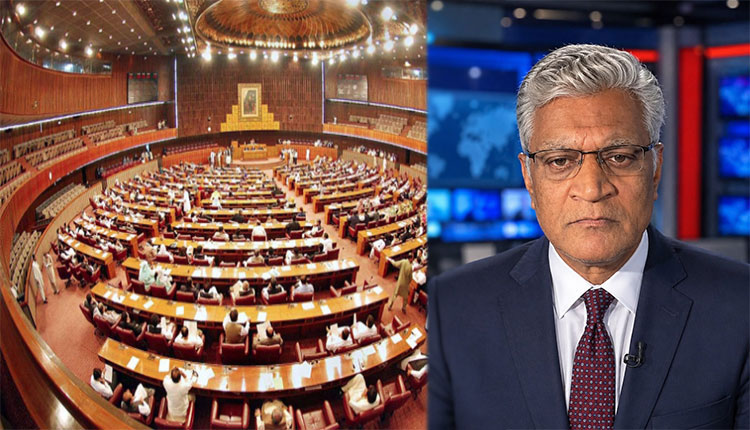
While much of modern political and economic literature focuses on market failure and state failure, deeper scrutiny is required to understand governance failure. Governance failure occurs when governmental organizations collapse in their core duties, coordination breaks down across different state departments, public-private partnerships fail, or the government is unable to effectively regulate and implement its own policies.
Governance naturally fails when there is a continuing disagreement among partners regarding the shared objectives required for networked cooperation.
1. Four Major Factors of Governance Failure
Political theorist Bob Jessop identifies four specific structural factors that cause governance systems to break down:
• Oversimplified Policies: Governments often take overly simplistic actions due to a lack of knowledge regarding the cause-and-effect relationship between their policies and desired outcomes. Unrecognized costs emerge throughout the process, causing the state to fail in achieving its objectives.
• Coordination Problems: Breakdowns in coordination regularly occur within and across interpersonal, inter-organizational, and inter-systemic levels where governance is applied. Because these layers interact in complex ways, a failure at one level disrupts the entire chain.
• Communication Problems: Serious gaps frequently open between official representatives engaged in networking or negotiation and the actual citizens whose interests they claim to represent. This disconnect is common in corporations, political parties, and social movements, raising major questions about legitimacy, effectiveness, and public resistance.
• Lack of Clarity of Roles Across Tiers of Government: Distinct governance arrangements are created to handle interdependent public issues. However, friction arises due to inconsistent definitions of governance objects, differing spatial and temporal timelines for action, and conflicting balances of political force.
2. Analytical Tools to Diagnose Governance Failure
To understand the root causes of conflict and governance collapse, International Development Institutes have created specialized diagnostic tools. These frameworks help policymakers determine which state-building reforms are urgent, how changes in one sector impact others, and how reforms affect overall state authority and legitimacy.
The primary diagnostic tools include:
• Political Economy Analysis (PEA): PEA examines the political and economic drivers of conflict, focusing on relative power, social exclusion, and the vulnerability of different groups over time. It exposes competing "rules of the game" between formal and informal institutions, identifying shifting coalitions and patrimonial systems that either prevent state collapse or undermine stability.
• Participatory Methods and Tools: Social exclusion is both a major cause and symptom of governance failure. Participatory tools strengthen state-society relations by bringing marginalized groups—such as ethnic minorities, women, youth, the elderly, and disabled persons—into the decision-making process. According to the UNDP, these assessments should be country-led, involving local stakeholders in designing methodologies, collecting data, and applying results.
• Political Settlements Analysis: This framework combines actor mapping, conflict audits, and political economy analysis to evaluate how a country's political settlement is maintained or altered. It explores historical evolution, subnational power dynamics, and how the state connects to society.
• Dilemma Analysis: Recommended in the OECD publication "Do no Harm", this specific state-building tool examines contradictions between competing donor objectives and highlights the difficult trade-offs required when prioritizing and sequencing reforms.
3. Limitations of Assessing Tools
Despite the wide variety of diagnostic frameworks available today, experts note that there is still a limited evidence base evaluating their actual impact on outcomes in fragile or weak states.
Over the past two decades, international agencies have frequently developed new assessment tools because existing ones fell short of expectations in complex environments. Often, a tool becomes "mainstream" and is applied simply because other agencies are using it, causing its original rationale to disappear. Consequently, the governance field is steadily shifting away from a narrow focus on formal institutions toward deeper studies of the underlying political economy.